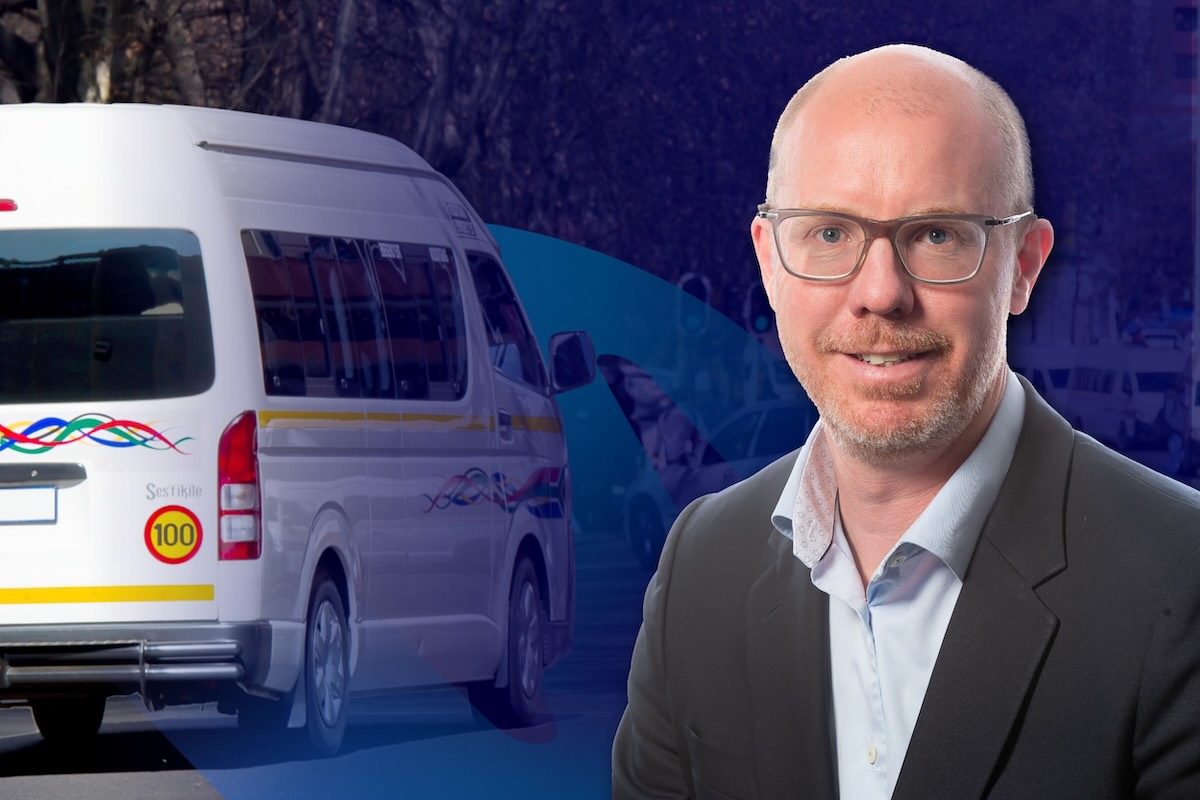

When discussions turn to entrepreneurship and job creation in South Africa, the focus often falls on start-ups, technology businesses, and large-scale industrial projects. Yet one of the country’s largest and most resilient SME ecosystems is hiding in plain sight: the mini bus taxi industry.
Minibus taxis move 15 million people per day in South Africa, making this form of transport the predominant form of public transport in the country, dwarfing trains and buses by a factor of 15:1. Each of these minibuses represents an SME supporting an entire ecosystem of SMEs found in and around taxi ranks.
Many of these taxi SMEs and the SMEs they support are not formal but are run by highly entrepreneurial, innovative, and sophisticated operators. It is operators and owners such as these that are key in solving the unemployment crisis in South Africa.
Built to Survive
Over the past six years, the sector has faced repeated shocks. COVID, floods in KZN, which shut down the Toyota manufacturing plant for six months, riots in KZN and Gauteng, which destroyed infrastructure and therefore jobs, fuel increases as a result of the Russia-Ukraine war, and most recently, fuel increases as a result of the war in the Middle East have all placed significant pressure on operators and their businesses.
Despite these challenges, the sector remains remarkably resilient.
The question is how institutions that serve these businesses can become more effective at supporting them through periods of uncertainty.
What If We Supported SMEs Differently?
One of the clearest findings in academic research is that data-driven decision-making and rigorous experimentation lead to better outcomes. Firms learn faster when they test, measure and adapt. Financial institutions can serve clients more effectively when they understand who their customers are, what kinds of support work best for each client and under what circumstances.
It is within this context that Mobalyz has partnered with top researchers from the US to undertake a series of projects focused on how data-driven learning and experimentation can be applied to create financial products that better support minibus taxi operators, strengthen the institutions that serve them, and contribute to more resilient and inclusive economies.
Learning Before the Next Crisis Hits
The partnership’s first major experiment focused on clients experiencing financial distress. The goal was to understand how best to support customers who were at risk of default while also improving outcomes for the business. The interventions generated roughly R50 million additional revenue and helped keep approximately 1,500 clients operational who otherwise would likely have gone into default within a year. The experiment has since been operationalised, resulting in sustainably better outcomes for both the institution and its clients.
Building on those learnings, three new experiments are now being launched.
Can Relief Be Smarter?
The first focuses on the current fuel crisis, which has significantly increased operating costs for operators. The objective is not only to provide relief but also to learn which interventions work best for different clients so that future responses can be faster, more effective and more responsible.
Rewarding the Right Behaviours
The second project focuses on vehicle care and operator behaviour. Lower speeds, better maintenance and better care of vehicles are associated with stronger repayment, fewer accidents and longer vehicle life. We also understand that operators face real pressure to remain profitable in a difficult operating environment. We are in the process of designing insurance and financial products that are incentive-compatible for both the institution and its clients.
Preventing Distress Instead of Managing It
The third project focuses on proactive relief. Using data on declines in driving activity within operating areas, the aim is to identify operators experiencing shocks outside of their control and provide support before distress becomes default.
A New Approach to SME Finance
These initiatives reflect a broader shift in thinking about SME finance. Rather than waiting for businesses to fall behind and then responding, there is growing recognition that data can be used to anticipate distress and provide support earlier. The goal is to build products that are better suited to the reality of SME life: dynamic, uncertain, constrained, but also full of possibility.
If South Africa is serious about building a more resilient and inclusive economy, we need to pay closer attention to the entrepreneurs who keep millions of people moving every day and explore new ways of supporting them before challenges become crises. Mobalyz is committed to testing these ideas in the market and sharing the lessons that emerge.